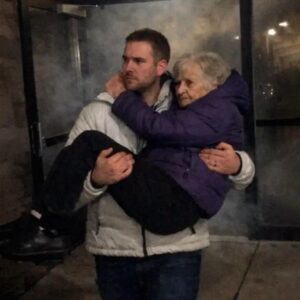
In the realm of modern medicine, few procedures are as emotionally and physically significant as a living donor organ transplant. It is a unique medical intersection where a healthy individual chooses to undergo a major, invasive surgery not for their own benefit, but to sustain the life of another. This act of profound altruism reached its most poignant expression in a story currently moving through the public consciousness: a son who stepped forward to donate a portion of his liver to his father. Driven by a bond that transcends the natural instinct for self-preservation, the young man entered the operating theater with a singular goal—to gift his father a second chance at life. However, what was intended to be a narrative of triumph and shared recovery has taken a tragic turn, as the son now faces life-altering complications that have left a family and a community in a state of profound shock and grief.
The decision to become a living liver donor is never made lightly. Unlike a kidney donation, where one of two distinct organs is removed, a liver donation involves a complex procedure known as a partial hepatectomy. Surgeons must carefully remove a specific lobe of the donor’s liver—either the right or left, depending on the recipient’s needs—to be transplanted. The liver is a remarkable organ, the only one in the human body capable of regeneration; in a successful scenario, both the piece in the recipient and the remaining portion in the donor will grow back to full size within weeks. Yet, the surgery itself is a high-stakes endeavor that requires a masterclass in vascular and biliary precision. For a son to volunteer for such a path represents a level of devotion that is difficult to quantify, a literal offering of one’s own flesh to ensure a parent’s survival.
According to reports surrounding this specific case, the initial atmosphere was one of cautious optimism. The family had navigated the grueling psychological and physiological screening processes required to clear a donor for surgery. They had shared moments of hope, visualizing a future where the father’s illness was a distant memory. The son’s courage was the cornerstone of this hope. When the day of the surgery arrived, the commitment was total. But as any transplant surgeon will attest, the successful completion of the procedure is only the first hurdle. The true test of a transplant lies in the delicate, unpredictable window of post-operative recovery.
Tragically, for this family, the post-operative period became a descent into a medical nightmare. While the father’s body began the slow process of accepting the new graft, the son—the healthy donor—began to experience a cascade of unforeseen complications. In the specialized world of transplant medicine, the “donor’s safety” is considered a sacred trust. When a donor suffers, the emotional weight on the medical team and the family is exponentially heavier than in standard surgeries. Complications can range from bile duct leaks and internal hemorrhaging to the most feared outcome: acute liver failure in the donor or systemic infection. Each body is a unique biological environment, and even with the most advanced technology and expert care, the human response to major trauma can sometimes defy medical expectations.
The irony of the situation is as sharp as it is painful. The father, who was the one in need of saving, now watches from his own hospital bed as the son who saved him fights a different battle. The psychological toll on a parent in this position is unimaginable; the gift of life is suddenly overshadowed by the guilt of the price paid for it. This “heartbreaking turn” has sparked a massive wave of sympathy across social media and within medical communities, as people grapple with the sheer unfairness of a selfless act leading to such a devastating result. It serves as a visceral reminder that even in an age of medical miracles, there are no guarantees, and every surgical success is a hard-won victory against a myriad of risks.
Beyond the immediate tragedy, this story has reopened a broader conversation about the support systems available for living donors. While recipients often have clear paths for long-term care, the donor’s journey is sometimes seen as secondary once the initial surgery is complete. This case highlights the necessity of “comprehensive care” that extends far beyond the operating room. It emphasizes the need for psychological support, financial protections, and lifelong medical monitoring for those who risk everything for another. The son in this story did not just give an organ; he gave his health, his time, and potentially his future.
As the news continues to circulate, the narrative has become a focal point for discussions on the fragility of life. It challenges the “cinematic” version of organ donation, where the story ends with a tearful embrace and a sunset. The reality is often messier, defined by the sterile hum of intensive care units, the anxiety of blood test results, and the slow, grueling work of physical therapy. For the community watching this unfold, the reaction has been one of collective mourning. There is a sense of “national sadness” when a hero—and a donor is a hero in the truest sense—is brought low by the very act of their heroism.
In hospitals across the country, medical professionals are using this case as a moment of reflection. It underscores the importance of the rigorous “informed consent” process, where donors must be made aware that they are taking on a risk that offers them no personal physical benefit. It is the purest form of sacrifice, and when that sacrifice goes awry, it shakes the foundations of the transplant community. Yet, even in the shadow of such complications, the courage shown by the son remains an enduring light. His actions were not defined by the outcome, but by the intent. He chose love over safety, and that choice, regardless of the medical complications that followed, remains a testament to the highest reaches of the human spirit.
For the family at the center of this storm, the road ahead is long and shadowed by uncertainty. They are navigating a landscape of grief and hope, waiting for signs of improvement and clinging to the expertise of the specialists surrounding them. The sympathy pouring in from strangers serves as a small comfort, a recognition that their struggle is seen and their son’s bravery is honored. It is a reminder that we are all connected by these invisible threads of empathy and that the suffering of one family resonates with us all.
In the end, the story of the son who donated his liver to his father is a story of a life interrupted by an act of grace. It is a reminder to cherish the bonds we have and to respect the immense courage of those who walk into the unknown to save a life. While we hope for a medical miracle to rectify the complications, the son’s legacy is already secured. He proved that the capacity for human sacrifice is vast, and that even in a world often defined by selfishness, there are still those willing to give everything for a father, a mother, or a friend. His bravery is a permanent part of the family’s history, a gift that remains profound regardless of the hardships that followed.