Wind clawed through bare branches and drove ice into your eyes until every breath tasted like metal. Beyond the tree line, the Sterling Estate glowed like a private planet—warm light behind tall windows, perfect temperature, perfect silence. A world built to keep reality outside.
The Sterling Christmas Eve Gala was their yearly performance. Senators, donors, tech executives, local celebrities—everyone polished and smiling beneath chandeliers the size of small cars. A quartet played something delicate in the corner while money laughed softly over champagne.
I arrived late because I wasn’t a guest. I was a prop.
The Sterlings had adopted me years ago and paraded me like proof they were good people: the orphan turned cybersecurity prodigy. My seat at their table was part of the décor—human evidence of their “generosity.”
My SUV crunched up the long driveway. As I approached the iron gates, I expected them wide open for valets.
They were locked.
I punched in my code. Access denied.
I tried again. Access denied.
Annoyance flared, then died as my headlights swept the roadside. Fifty yards down, near the woods, something small and bright lay half-buried in a drift.
Pink flannel.
I slammed the car into park and ran. Snow swallowed my shoes. Cold bit through my suit. I didn’t feel any of it.
“Mia!”
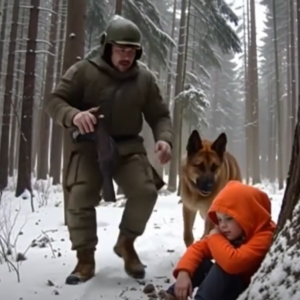
She was curled tight, a child-shaped lump in the white. Skin pale as marble. Lips blue. No movement. I scooped her up and she weighed almost nothing, like lifting a frozen bird. I laid her on the back seat, cranked the heat, ripped off my coat and wrapped her in it.
“Mia, open your eyes. Hey—look at me.”
Her lashes fluttered. “Liam?” The word was thin, cracked.
“I’m here,” I said. “You’re safe.”
Her eyes snapped wide, not with relief but terror. She grabbed my wrist with desperate strength.
“No,” she gasped. “Don’t take me back. Father said I’m a bad investment. He said bad investments get liquidated.”
The sentence hit harder than the storm.
“What did he do?” My voice came out low, sharp.
Mia’s teeth chattered so violently I thought they’d break. “He threw me out. He said if I came back to the door, the doctors would come. The doctors with the needles.”
My jaw clenched. I eased her collar aside, expecting bruises.
I found a brand.
A deep purple-black imprint on her shoulder blade—clean edges, ridges, unmistakable shape. The Sterling crest: shield and lion. The mark of Arthur Sterling’s signet ring.
He hadn’t just hit her. He’d stamped her like property.
Mia fumbled in her pajama pocket. “I found the paper,” she whispered. “I took it. Is this why?”
She handed me a wet, crumpled sheet. I unfolded it carefully.
CERTIFICATE OF DEATH
Name: Mia Sterling
Date of Death: December 25th, 2024
Cause: Accidental Hypothermia
It was December 24th.
They weren’t improvising. They were scheduling.
My phone buzzed. The caller ID said “Home.”
I stared at it while the heater roared. Every rational instinct said drive to the police. Then reality answered: Chief Miller would be at the gala, drinking Arthur’s scotch. The judge who signed the adoption paperwork would be smiling for photos under those chandeliers. In this town, the Sterlings didn’t call the law. They hosted it.
I picked up.
“Liam,” my mother’s voice purred, smooth as expensive wine. “Where are you? The Senator asked for you.”
“I’m at the gate,” I said, forcing calm. “My code isn’t working.”
“Oh, dear. We locked it early. There was an… incident.” A pause, then a deliberate softness. “Have you seen a stray animal on the road? Or perhaps… Mia?”
“Mia?” I echoed, making the word sound casual. “Is she missing?”
My father’s voice cut in behind hers—rich, booming, practiced. “The child is sick. Psychotic episode. Attacked your mother, broke a vase. Ran into the storm. She’s a liar, son. Dangerous. If you see her, don’t engage. Bring her to the service entrance. The doctors are waiting to sedate her.”
Mia shrank under my coat, eyes glassy with fear.
“I see her,” I lied. “She’s near the gate. She’s… not stable.”
“Get her,” Arthur said. “Don’t let the guests see.”
I kept my voice steady. “If I drag her in now, she’ll scream. Everyone will hear. Cameras will catch it.”
Silence. The Sterlings feared nothing but public embarrassment.
“What do you suggest?” my mother asked, suddenly sharp.
“I’ll take her to my apartment,” I said. “Warm her up. Calm her down. Once the guests leave, I’ll bring her back quietly. No scene.”
A pause long enough to feel like a knife held to my throat.
“Good boy,” my father said finally. “We knew you were loyal. Keep her quiet, Liam. Or we’ll handle you too.”
The call ended.
I didn’t drive to my apartment right away. I drove along the estate’s perimeter wall until my dashboard caught the “Sterling_Guest” Wi-Fi signal.
I wasn’t just their obedient son. I was head of cybersecurity for a Fortune 500 company. A career they funded because they liked having a weapon they thought they controlled.
I opened my laptop. I didn’t need to “hack” their system. I’d designed parts of it. Years ago, I left myself an emergency backdoor, the way you leave a spare key when you know the owner is dangerous.
A few commands. A quiet install. The keylogger lit up like a vein tapped for blood.
Within minutes, Arthur’s keystrokes streamed onto my screen.
From: Arthur Sterling
To: J. Miller (Legal)
Subject: The Asset
Liam has the package. He is containing it. Prepare paperwork for tragic accident tomorrow. And have the agency prep the next shipment. We need a boy this time. Higher payout for behavioral issues.
Shipment.
My stomach turned. “They’re not parents,” I whispered. “They’re predators.”
At my apartment, Mia sat on my couch wrapped in blankets, clutching a mug of cocoa like it was life support. She watched the windows like she expected hands to reach through the glass.
“They’ll come,” she whispered. “They always come.”
I pulled up the Sterling private cloud and used Arthur’s password—Legacy1990, because men like him worship nostalgia and never believe they can be breached. The folders opened.
Dozens of names.
Project: Sarah (2010–2012) — Liquidated
Project: David (2014–2015) — Returned (Defective)
Project: Mia (2020–2024) — Matured
Then I saw it.
Project: Liam (1999–Present)
I clicked and stared at my own childhood—spelling bee photos, scholarship awards, graduation. Beneath them, not proud words but cold assessments.
Subject displays high intelligence. Retain for image maintenance.
Emotional attachment: low. Investment return: high.
I wasn’t family. I was branding.Family
I dug deeper and found the money trail: state subsidies for “high-needs” adoptions, insurance policies taken out on children labeled “fragile,” payouts timed to “accidents.”
Mia’s policy: two million dollars.
Vested yesterday.
A heavy pounding slammed my front door.
Mia jolted awake with a sound that wasn’t a scream so much as a memory escaping her throat.
A voice in the hallway called, too cheerful to be real. “Liam! Dr. Evans. Your father sent me.”
I looked through the peephole.
Dr. Evans stood there without his medical bag. In his hand was a syringe. Behind him were two men in heavy coats, shapes under the fabric that weren’t harmless.
“Open the door,” Dr. Evans said, dropping the warm tone. “Or we break it down. Your father wants this done tonight.”
My body went cold with clarity. Not panic. Not confusion. Precision.
“Mia,” I whispered, grabbing my coat and laptop. “We’re leaving.”
The fire escape window was half-frozen shut. I kicked it until the metal groaned and gave. Wind punched into the apartment. Four floors down, a dark alley waited.
“I can’t,” Mia sobbed, looking down.
“You can,” I said. “Jump to me. I’ll catch you.”
The door splintered behind us.
Mia jumped.
I caught her, the impact nearly throwing us off the railing, and we scrambled down the icy stairs into the alley. We ran until my lungs burned. We ended up at a grim all-night internet café where nobody asked questions and everyone mindlessly stared at screens.
My phone buzzed. A text from Chief Miller.
Your father filed a kidnapping report. You are armed and dangerous. Shoot-to-kill authorized. Bring the girl in.
I stared at it, then at Mia’s small hands clamped around mine, her eyes wide with trust.
“Are we going to die?” she asked.
“No,” I said, and meant it. “We’re going to a party.”
I drove back toward the Sterling Estate, parked in the woods half a mile away, and left Mia hidden under blankets with a burner phone.
“If I’m not back in twenty minutes, you press that button,” I told her. “You tell the person who answers everything. No matter what.”
Her mouth trembled. “Don’t leave me.”
“I’m not leaving you,” I said. “I’m ending them.”
I slipped onto the property through the blind spot near the garage and found the main AV rack that fed the ballroom’s lights and projector. I plugged in my laptop and loaded the package I’d built in an hour of pure focus: documents, audio, video, financial records, the “projects” list.
Upstairs, Arthur Sterling tapped his glass for attention.
“On this holy night,” he began, voice full of false warmth, “we remember the less fortunate. The children we strive to save.”
“To the children,” the crowd toasted.
I hit enter.
The ballroom plunged into darkness. Music died mid-note. A confused wave rippled through the room.
Then the screen behind Arthur lit up.
CERTIFICATE OF DEATH — MIA STERLING — DEC 25, 2024
Gasps cut the air. A senator’s wife covered her mouth. Someone laughed nervously, as if it had to be a joke.
Then Arthur’s own recorded voice thundered through the speakers.
“She’s a liar, son. Bring her to the service entrance. The doctors are waiting.”
Arthur froze, face bleaching.
The screen switched to nanny-cam footage: my mother in pearls leaning over Mia, calm as a surgeon, pressing a cigarette into the child’s arm.
“Stop crying,” her recorded voice said. “You’re damaging the merchandise.”
The room erupted—shouts, screams, glasses shattering on marble.
I stepped onto the balcony above them, snow clinging to my suit like ash.
“You can’t cut the truth,” I called down. “Not tonight.”
My mother pointed at me, voice shrill. “He’s insane! He’s lying!”
“Look,” I said.
The screen changed again: the list of “projects,” the children’s names, dates, payouts lined up like a ledger of bodies.
Chief Miller drew his weapon near the bar, shouting, “He’s armed! Everybody down!”
I didn’t flinch. I just nodded toward the doors.
They burst open.
Not local police. Federal agents. SWAT. Yellow letters on dark jackets: FBI.
Miller’s gun lowered as red laser dots stitched across his chest. Arthur tried to run. Two agents tackled him hard enough to knock the breath out of him. My mother stood rigid, eyes full of hatred, not remorse.
“I gave you everything,” she spat as handcuffs clicked.
“You gave me a cage,” I said. “And you filled it with children.”
Outside, flashing lights painted the snow blue and red. I walked past the chaos to the woods, opened the car door, and Mia launched into my arms like she’d been holding herself together with a single thread.
“Is it over?” she whispered.
“Yes,” I said. “They’re not touching you again.”
At the field office later, an agent slid a file across the table.
My adoption paperwork. Mia’s. And a lab report.
Biological sibling match: confirmed.
My throat tightened. The Sterlings hadn’t just bought children. They’d separated us on purpose—two adoptions, two streams of money, two “assets” kept apart to avoid complications.
I looked at Mia—same hair, same eyes, my real mother’s eyes—and the anger finally cracked into grief for the years stolen.
One year later, Christmas Eve smelled like pine and cocoa in a small apartment that actually felt warm. Mia was nine, in therapy, sleeping through the night most days. The bruises and the brand were gone, but her laughter had returned, steady and real.
“The big house was cold,” she said once, hanging a crooked ornament. “Even in summer. This is warm.”
I stirred cocoa and watched snow fall gently outside, no longer an assault—just quiet.
The phone rang. It was the agency I now helped, exposing fraud cases like the Sterlings.
“We have a boy,” the woman said. “Ten years old. Bad placement. He needs someone who understands.”
I looked at Mia on the rug, safe and smiling. We had room.
“Send me the file,” I said.
Mia looked up. “Are we helping him?”
“Yes,” I said.
She grinned. “Does he like hot chocolate?”
“I think he will,” I said, and meant that too.