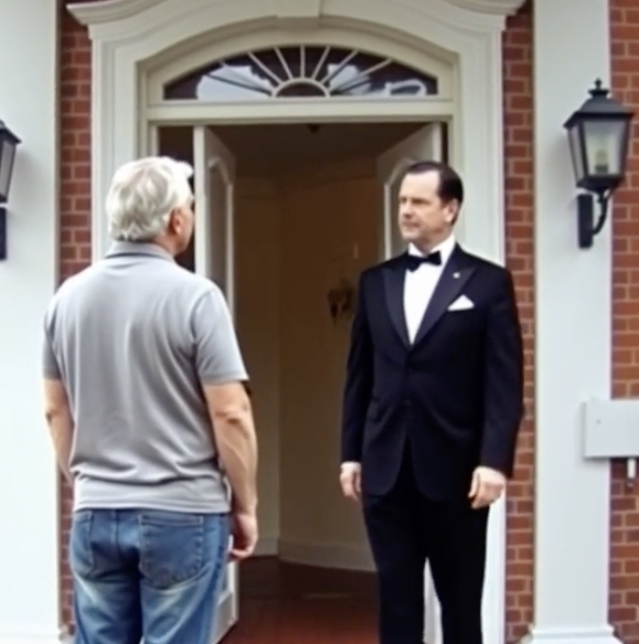
 The dinner began just as awkwardly as anticipated. I was ushered into a dining room that looked like it had been lifted straight out of an art gallery, with its high ceilings, crystal chandeliers, and walls adorned with portraits of solemn ancestors. Around the table sat Jessica’s parents, Rupert and Margaret Harrington, both impeccably dressed and exuding an air of affluence and entitlement. My son and his wife exchanged nervous glances, seated across from them.
Rupert started the conversation with polite, probing questions about my work. “So, you’re in consulting? Quite a competitive field, I imagine,” he remarked, his tone layered with thinly veiled skepticism.
“Yes, it can be,” I replied, keeping my response deliberately vague. I wasn’t about to elaborate on how my firm had secured multi-million dollar contracts or my role in advising some of the largest corporations in the country.
The meal progressed with forced pleasantries and delicate balancing. I could sense the Harringtons trying to measure me up, to find some weak spot to confirm their preconceptions. As the evening wore on, I remained cordial, yet distant, allowing them to believe whatever they wished about my supposed modest status.
It was during dessert, however, that the unexpected moment occurred. Their grandchild, a precocious little girl named Amelia, entered the room, carrying an old, worn-out toy in her hands. It was a stuffed bear, its fur matted and one of its eyes missing. She walked right up to me, ignoring everyone else, and plopped herself onto my lap.
“Grandpa, can you fix Mr. Bear? He’s broken,” she asked, her innocent eyes looking up at me with trust.
The room fell silent. My son looked mortified, perhaps wondering if this was another potential embarrassment. But I smiled, took the bear, and examined it closely. “Of course, Amelia. Mr. Bear just needs a little care, just like everything else.”
In that moment, the atmosphere shifted. The Harringtons, who had been rigid and judgmental, seemed to soften. Margaret broke the silence, her voice gentle. “It’s wonderful how you connect with her. Children really do have an innate sense, don’t they?”
I nodded, focusing on Amelia. “They see what’s truly important.”
The rest of the evening carried on with a new, warmer tone. The Harringtons seemed to reconsider their initial perceptions, engaging more openly. Rupert even asked about my opinion on a few business matters, which we discussed amiably.
When the evening finally drew to a close, Jessica walked me to the door. She hesitated a moment, then said, “Thank you for coming. It means a lot to him… to us.”
I nodded, giving her a reassuring smile. As I drove away from the Harrington mansion in my old Honda, I couldn’t help but reflect on the evening’s events. My son might never know the extent of my success, but perhaps that was for the best. I had built a life based on principles and values, and I hoped that, someday, he would understand the strength that lay in simplicity, and the power of being underestimated.
