 Inside each envelope was a simple letter, one that contained no malice but spoke the truth clearly and calmly. “Dear Family,” it began, “As you gather here today, please know that my love for you remains unchanged. However, I’ve come to realize something important this year. Family should mean inclusion, acceptance, and unconditional love—not just when it’s convenient.”
The words were straightforward, mirroring the tone I’d perfected over years of keeping peace. Each sentence was carefully constructed to be firm yet kind, much like the way I’d tied napkins with twine or folded towels with crisp edges. It was time they understood the weight of their actions without the cushion of my perpetual placidity.
“I hope this dinner gives you a moment to reflect on what truly binds us. It isn’t just blood or tradition; it’s how we honor each other and everyone we choose to call family. Maya is and will always be my daughter, your niece, your granddaughter. She deserves every bit of respect and inclusion as anyone else at this table.”
Ethan, perceptive as ever, met my eyes with a small nod of solidarity across the table. Maya sat beside me, her quiet presence a testimony to the strength she carried. She gave me a soft smile, one that told me she understood this was not only about one wedding night but about something far more significant.
The room was filled with a stunned silence, broken only by the rustle of envelopes and the occasional intake of breath. My sister Tessa’s cheeks flushed a deep crimson as she folded and unfolded her letter, searching for something to say that might undo the unspoken truths laid bare before her. My parents sat with wide eyes, processing the realization that their eldest daughter had finally broken her pattern of quiet compliance.
“Claire,” my mother started, her voice softer than I had heard in years, “We never wanted to make you—or Maya—feel this way.”
I nodded, knowing this was hard for her to admit. “I believe you, Mom. But intentions don’t always translate into actions. It’s our actions that define who we are.”
The dinner went on, conversations tentatively picking up again, though with a noticeable change in tone. The laughter returned, but it was more subdued, as if everyone was recalibrating their understanding of what family meant, of what I was asking of them.
Afterward, as the last of the dishes were cleared and the coats were retrieved, there were hugs exchanged that felt a little tighter, a little more sincere. Tessa lingered by the door, her expression pensive. “I didn’t realize until tonight,” she admitted quietly, “that I’d been so focused on the wedding being perfect that I forgot what matters most.”
“It’s never too late to start remembering,” I replied gently, offering a small smile.
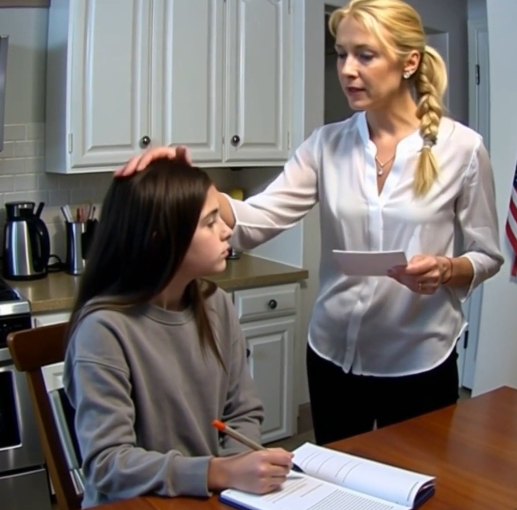
When the door finally closed on the night, the air felt different—lighter, perhaps. Maya joined me in the kitchen as we washed the dishes, the warmth of the water contrasting with the cool December night.
“Thank you, Mom,” she said, leaning against my shoulder.
“For what?”
“For making it clear I’m part of this family.”
I wrapped an arm around her, feeling the reassurance in her words. “You always have been, and you always will be.”
And as the last plate was put away, I felt a calm I hadn’t realized I’d been missing. I knew it wouldn’t be easy, that change rarely is. But as the night’s quiet settled over us, I was certain of one thing: I’d take this stand a thousand times over if it meant Maya could always feel like she belonged.
